
How shirt numbers mapped football's tactical shifts across decades
A Guardian Football analysis traces how shirt numbers evolved from rigid positional markers in the 1930s into symbols of identity, charting the sport's tactical development from the W-M formation to the modern No 10.
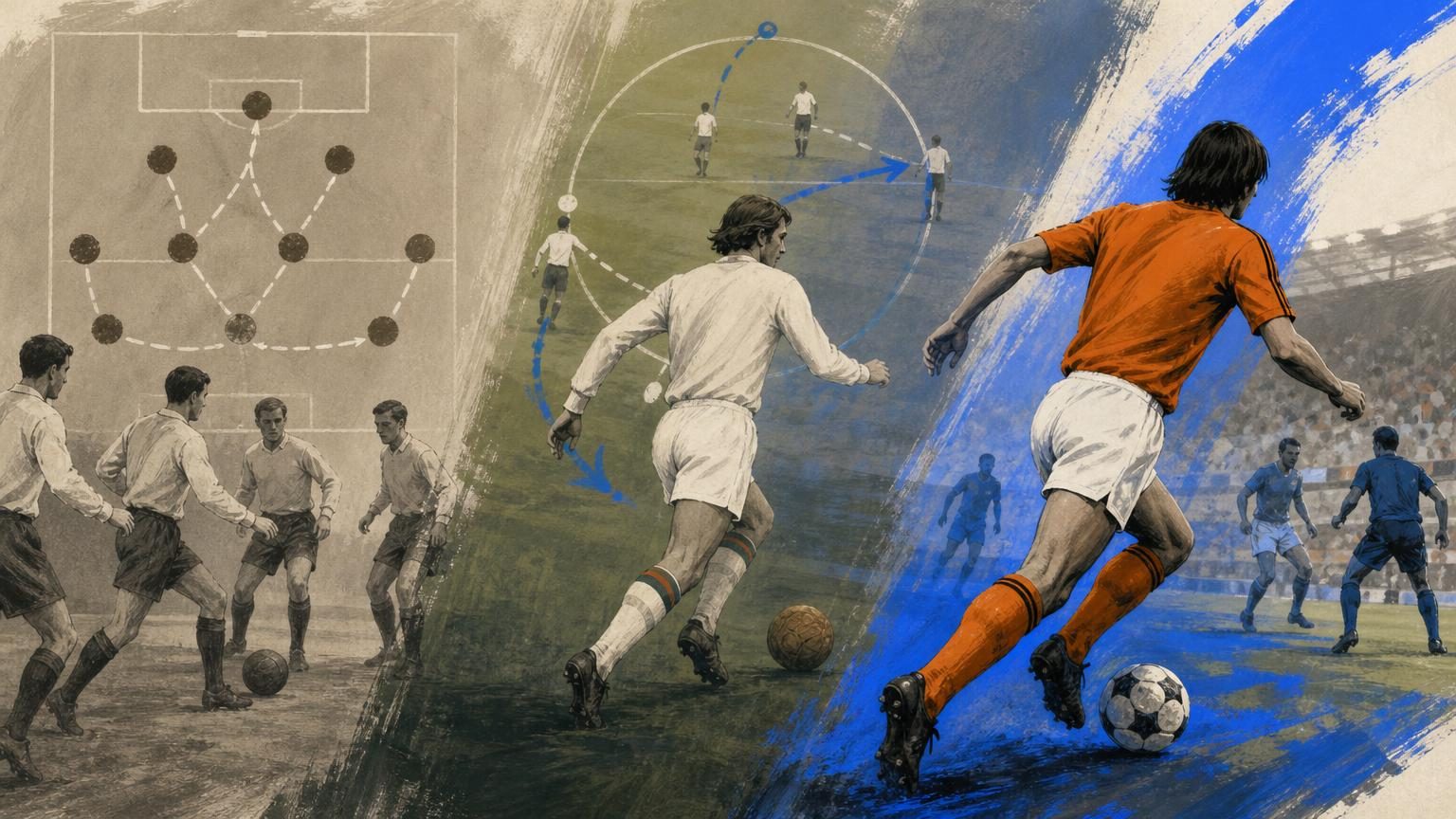
Shirt numbers began life not as a mark of identity but as a rigid map of position, according to an analysis by Guardian Football, which traces their origins back more than a century.
The earliest known instance of numbered shirts came in a 1911 match between the Australian sides Sydney Leichhardt and HSM Powerful. American football and baseball experimented with numbering in the following years, and isolated trials followed in the American Soccer League from 1923.
English football's engagement with numbering began in August 1928, when two opening-day fixtures featured numbered shirts. Chelsea's outfield players wore 2 to 11 against Swansea in the Second Division, while Sheffield Wednesday wore 1 to 11 and Arsenal 12 to 22 in a First Division meeting at Hillsborough. The 1933 FA Cup final also used numbering from 1 to 22, partly because a kit clash forced Everton and Manchester City into change strips.
It was not until June 1939 that the Football League formally adopted squad numbers, voting 24-20 to require both teams to wear 1 to 11 in a fixed order based on an old 2-3-5 formation, even though most sides had by then switched to the W-M system, a 3-2-2-3. That left a gap between where numbers theoretically placed players and where they actually operated, with the centre-half in the No 5 shirt sitting between the full-backs and the inside-forwards in 8 and 10 playing deeper than the wide men.
Those positional conventions hardened into near-sacred status. When Hungary visited Wembley in 1953 and inflicted England's first home defeat by a foreign side, the numbering of their team caused confusion among English observers, Guardian Football notes. The centre-back Mihaly Lantos wore No 4, the midfield orchestrator Jozsef Bozsik wore No 5, and Nandor Hidegkuti, numbered 9, operated from deep rather than as a conventional centre-forward, leaving England's nominal centre-half unsure whether to follow the shirt number or the role.
That defeat prompted a rethink among English clubs, eventually producing back fours built by withdrawing the left-half into defence. Alf Ramsey's 1966 World Cup-winning side then demonstrated the value of a packed midfield, pulling wingers back into a 4-4-2 shape numbered 1; 2, 5, 6, 3; 7, 4, 8, 11; 9, 10, with the No 4 typically the more defensive of two central midfielders and the No 10 retaining the inside-forward's creative licence.
Argentina charted a different route, the analysis explains. At River Plate in the late 1930s, the tight-marking right-half Norberto Yacono set a pattern in which the No 4 effectively became a third back operating on the right, a convention still reflected in Javier Zanetti's status as Inter's retired No 4. After Argentina's 6-1 defeat to Czechoslovakia at the 1958 World Cup prompted their own switch to a back four, a typical national side lined up 4, 2, 6, 3, with the No 5 surviving as a revered midfield enforcer in players such as Antonio Rattin, Americo Gallego and Javier Mascherano.
Brazil's path diverged again, Guardian Football's analysis notes, with no equivalent widespread conversion of the right-half into a conventional right-back as the back four took hold there.