
New book traces how Pelé and Maradona's friendship turned to rivalry
A new book examines the relationship between Pelé and Diego Maradona, from a 1979 meeting in Rio de Janeiro to the public feud that followed the 1982 World Cup, Guardian Football reports.
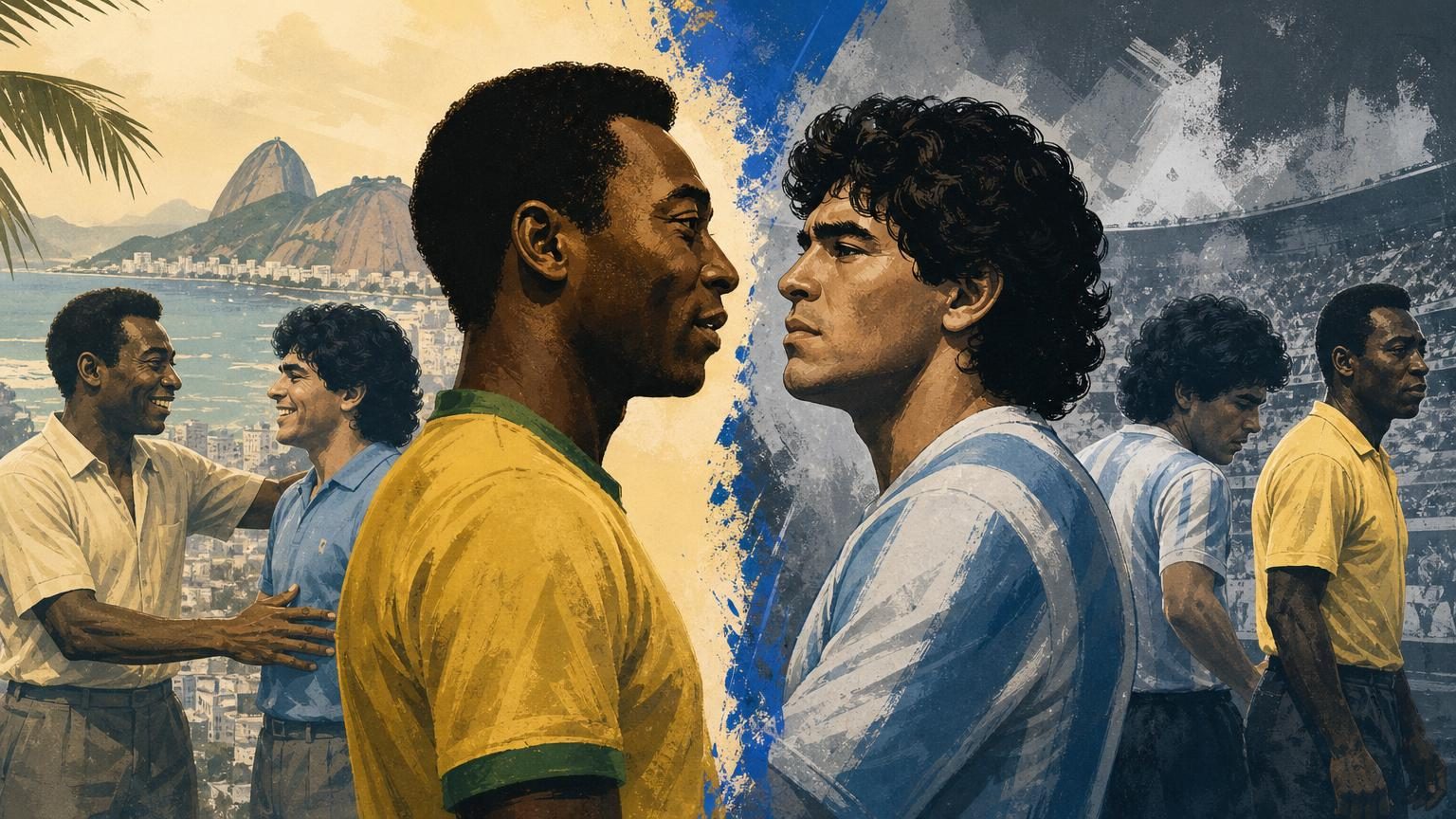
Pelé and Diego Maradona first met in April 1979 in Rio de Janeiro, not long after the young Argentinian had led his country to the finals of the World Youth Cup at under-20 level, according to a new book reported on by Guardian Football.
The meeting was engineered by Guillermo Blanco, a reporter for the Argentinian magazine El Gráfico, who put Maradona on a flight to Brazil with his father, his agent and a photographer without telling him in advance. The group travelled after Maradona's club, Argentine Juniors, played Huracán.
The following day they went to the Copacabana apartment of Alfredo Saad, where Maradona and Pelé spent an hour talking football and life. Blanco recalled that Pelé played guitar, sang, and then took Maradona's hand to offer advice about looking after his body and training hard, telling him there was a lot of responsibility on his shoulders. Blanco described the moment as feeling like a premonition of what was to come.
Pelé gave Maradona a signed ball, a Brazil shirt and a watch bearing his own name before the group left. Maradona later said he had known Pelé was a footballing god, and that meeting him confirmed he was a good person too.
The goodwill lasted only a few years. Writing a syndicated newspaper column during the 1982 World Cup in Spain, Pelé predicted before the tournament that Brazil's Zico would have a greater impact than Maradona, and questioned whether the Argentinian possessed, in his words, sufficient greatness in his person to justify the honours the world audience paid him.
Pelé's doubts appeared to be borne out when Maradona was sent off for stamping on Brazil's Batista in a 3-1 defeat in the second round, a result that eliminated the reigning champions. Pelé used his column the next day to call Maradona an immature young man who had barely had time to become the great player many people claimed he already was.
Maradona, who had regarded Pelé as a friend, felt betrayed by the criticism but did not retaliate publicly at the time, still only 21 and unsure of his own standing. It was only after captaining Argentina to the 1986 World Cup title that he began openly answering critics, by which point he had been anointed Pelé's successor and the rivalry between the two men was fully established.
For most of his career Pelé had been regarded as the outstanding player of all time, and contemporaries including Alfredo Di Stéfano, Eusébio and Johan Cruyff proved unable to sustain a lasting challenge at international level. Maradona, benefiting from a strong supporting cast with Argentina, was the first to pose a genuine threat to that status, a dynamic the book says Pelé himself recognised.