
Pogačar's resting heart rate and sleep data revealed in new documentary
A documentary series decoding elite athletes' physiology shows Tadej Pogačar's resting heart rate, recovery scores and sleep patterns, as tracked by his wearable technology sponsor Whoop.
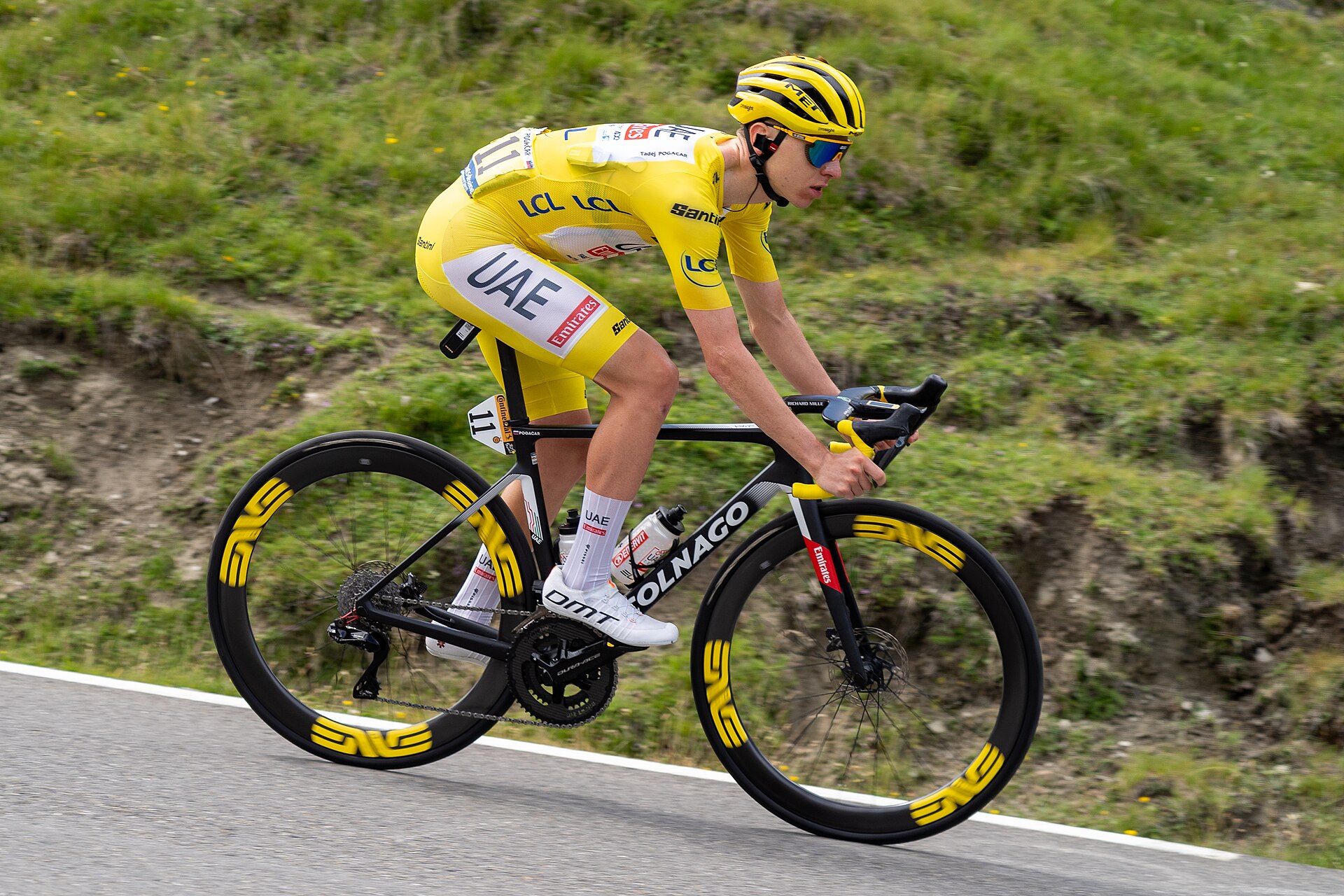
Tadej Pogačar has a resting heart rate of 38 beats per minute and a heart rate variability score of 100, according to new data disclosed by his physiological tracking sponsor Whoop, Cyclingnews reported.
The figures feature in the first episode of a documentary series called 'Anatomy of a G.O.A.T', broadcast on Eurosport, TNT Sports and HBO Max, which sets out to examine the science behind elite athletes' performances. The episode focused on the three-time Tour de France winner airs on Saturday 7 November and will stream on HBO Max in the UK, US and Europe.
Whoop's Global Head of Human Performance, Kristen Holmes, said Pogačar's resting heart rate of 38 compares with an average of 59 for a man of his age, 27. She said his six teammates at UAE Team Emirates-XRG, all also 27, average 42 beats per minute, putting Pogačar roughly four beats lower. Holmes said this points to "a more efficient cardiorespiratory system", describing his physiology as having "this very efficient engine".
The reading is some way off the 28 beats per minute reportedly recorded by five-time Tour de France winner Miguel Indurain, Cyclingnews noted. Pogačar's main rival in the Classics, Mathieu van der Poel, revealed earlier this year that his own average resting heart rate also sits at 38, with a recorded low of 34.
Whoop also measures heart rate variability, the variation in time between heartbeats tracked overnight, which the company describes as a 'readiness indicator'. Holmes said Pogačar's HRV reading of 100 compares with an average in the 80s for his six teammates, meaning he "has to work less hard for the same output". The average HRV for active individuals is said to sit between 40 and 65. Van der Poel's own HRV has previously been put at 200, a figure he has attributed partly to genetics and partly to fitness.
Sleep data formed another strand of the documentary. Holmes said Pogačar's sleep consistency — the stability of his bedtimes and wake times — stood at 84% during the 2026 Tour de France, against a range of 70 to 80% for his UAE Team Emirates-XRG teammates.
Research scientist Gregory Grosicki said high-intensity efforts typically degrade sleep quality even in elite athletes monitored by Whoop, but that Pogačar bucked that pattern. Grosicki said Pogačar was sleeping around seven hours before the 2026 Tour de France and increased that to eight hours during the race itself, calling the pattern "miraculous".
Asked about his sleep habits, Pogačar said: "I'm not a big hour sleeper, but if you eat clean and good for the dinner, I think it's the biggest impact on the sleep then. And yeah, you just need to be relaxed and be organised for the next morning."
His former coach, Iñigo San Millán, also commented on his recovery capacity in the documentary. San Millán said metabolic testing covering between 1,000 and 2,000 parameters, including antioxidant markers linked to recovery, showed Pogačar "was far ahead of everyone else".
Photo credits
File photo (2024). Photo: Hugo LUC · CC BY-SA 4.0 · via Wikimedia Commons · shown in full here; cropped in thumbnails
