
Cyclingnews traces decade-long shift in how fans view doping suspicion
A Cyclingnews analysis contrasts the hostile scrutiny Chris Froome faced in 2013 with the more forgiving climate now surrounding Tadej Pogačar and Jonas Vingegaard, even as climbing speeds have risen.
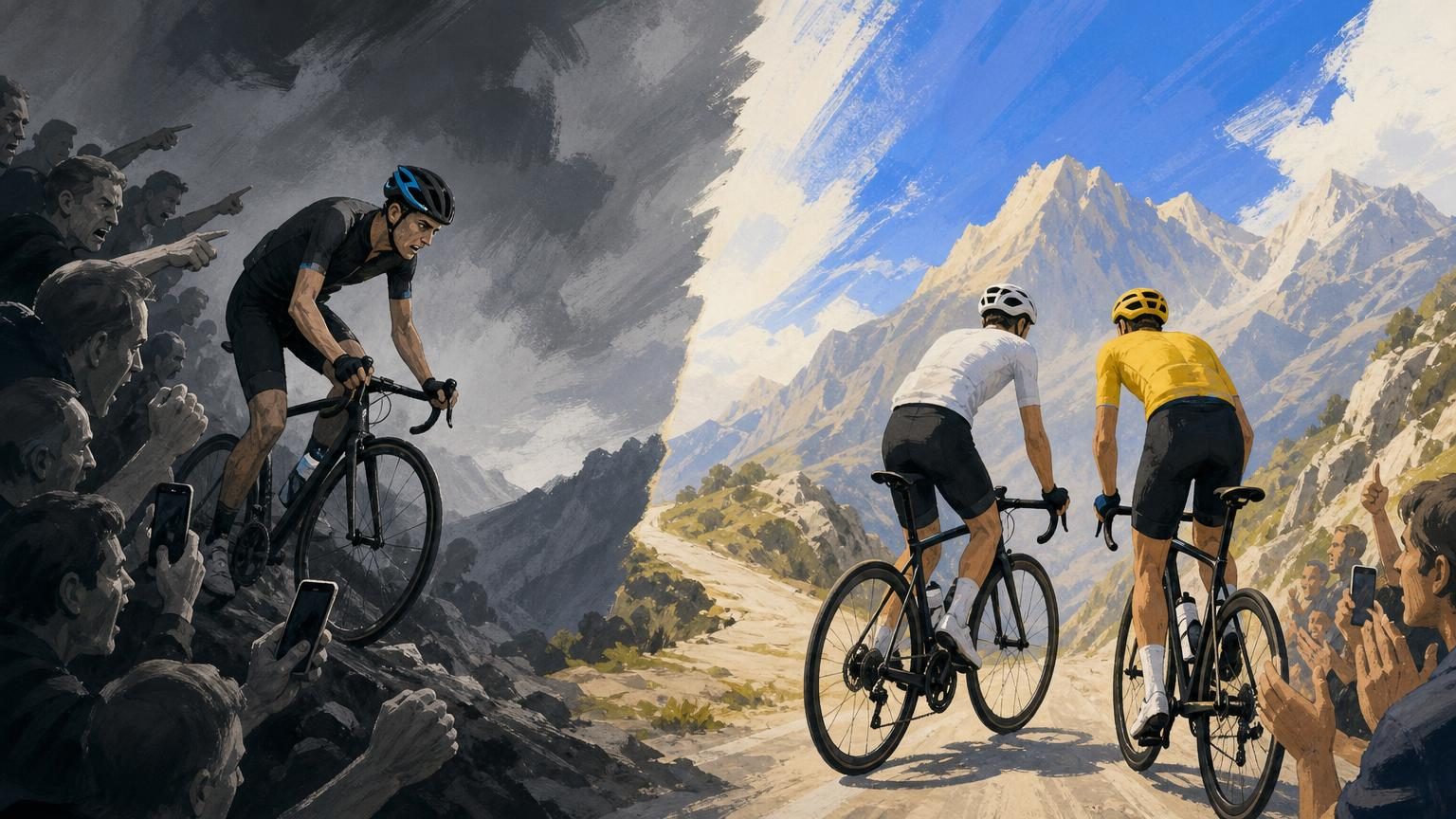
Cyclingnews has published an analysis arguing that the sport's relationship with doping suspicion has changed dramatically since 2013, when Chris Froome's maiden Tour de France victory was met with open hostility rather than celebration.
The piece recalls a press conference at the Park Inn Hotel in Orange the morning after Froome's win, where around a hundred journalists pressed him and Team Sky principal Dave Brailsford on whether his Mont Ventoux stage win and overall victory could be explained by doping.
Froome was asked directly what plan he had to answer critics, while Brailsford was challenged to give his 'most compelling reason' for the media to believe every member of his team.
Froome responded that his team had 'slept on volcanoes' preparing for the race, adding: "here I am basically being accused of being a cheat and a liar. And that's not cool," before leaving the room, according to Cyclingnews.
The outlet situates that moment within a decade of scandal that had eroded trust in the sport, listing the 1998 Festina Affair, Operation Puerto, Floyd Landis's positive test at the 2006 Tour, Michael Rasmussen's exit from the 2007 race, Alberto Contador's clenbuterol case and the 2012 USADA Reasoned Decision that brought down Lance Armstrong.
That climate of suspicion, Cyclingnews notes, spilled into physical hostility towards riders: Froome had urine thrown at him and was slapped and spat at, teammate Richie Porte was punched, and the Team Sky car was rocked by spectators on Alpe d'Huez.
The analysis contrasts that era with the current one, describing a far less adversarial atmosphere around today's leading riders. It notes that the worst treatment Tadej Pogačar has faced recently has been scattered boos on a handful of Tour de France stages, or having crisps thrown at him.
This shift has coincided with faster racing rather than slower, with Cyclingnews pointing out that climbers are now breaking records set during cycling's EPO era, with seven watts per kilogram becoming a new benchmark on key Grand Tour ascents.
Rather than police raids or rest-day positive tests, the outlet says this year's most notable doping-related story from the Tour de France concerned nighttime testing, after Pogačar and Jonas Vingegaard were woken for checks ahead of a significant Alpine stage, prompting criticism from some observers.
Cyclingnews frames this as evidence that the sport has moved from an era of deep, almost reflexive scepticism towards what it describes as a more protective form of fandom among supporters of today's top riders.