
Prudhomme cites Wiggins and Bahamontes to justify 2027 Tour time-trial surge
Tour de France director Christian Prudhomme says a sharp rise in time-trial kilometres for the 2027 route is designed to keep the race open longer, not to target defending champion Tadej Pogačar.
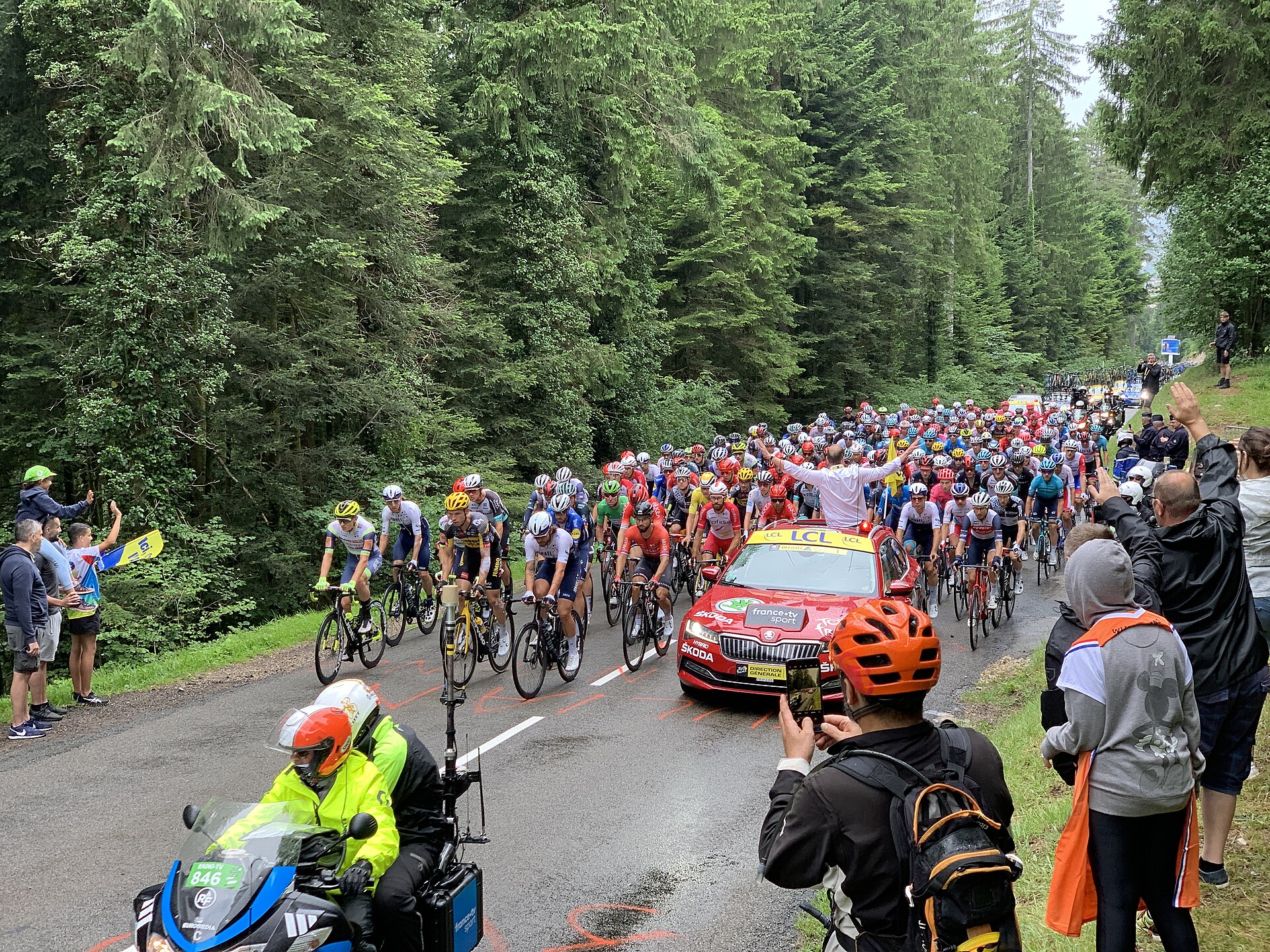
Tour de France director Christian Prudhomme has defended the biggest jump in time-trialling distance on the route in 15 years, insisting the change is not aimed at undermining Tadej Pogačar's dominance.
The 2027 route, unveiled on Thursday, includes a 38-kilometre time trial on stage seven and a 33-kilometre test on stage 11, taking the combined total against the clock to 71 kilometres, according to Cyclingnews.
Speaking to reporters after the presentation, Prudhomme reached back through Tour history to make his case, invoking Bradley Wiggins, winner of the 2012 race and a time-trial specialist, and Federico Martín Bahamontes, the 1959 champion regarded as the race's greatest-ever climber.
He noted that the last time the Tour carried this much time-trialling was during Wiggins' victory, and that organisers had since scaled it back because the same riders tended to win both the mountains and the clock stages, leaving little tactical variety.
That calculation has changed, Prudhomme said, with the emergence of riders such as Remco Evenepoel, who can build significant leads in time trials only to lose time again in the high mountains.
He drew a parallel with the rivalry between Bahamontes and Jacques Anquetil in 1959, when Bahamontes took time on the Puy de Dôme mountain time trial before Anquetil clawed back more than five minutes in the final test, a 69-kilometre stage to Dijon.
Prudhomme said the extra time-trial kilometres were meant to restore some of that competitive balance for the benefit of fans wanting the race to stay in doubt until the end, rather than to disadvantage Pogačar specifically.
He pointed out that cobbles, time trials or climbs placed in front of the Slovenian have not stopped him extending his advantage on descents, as happened on the Tourmalet during the 2025 race when he doubled his lead over Jonas Vingegaard after dropping him near the summit.
"If he [Pogačar] is stronger, he's stronger," Prudhomme said, while maintaining there was still a case for rebalancing the route, much as organisers had previously added punchier stages to sharpen the racing.
He closed with a nod to an old proverb, observing that organisers propose but it is the riders who ultimately decide how a race unfolds.
Prudhomme also urged fans not to assume the mountain stages would be predictable, highlighting the return of the Col de Burdincurutcheta in the French Basque Country on stage 19, an 8.7-kilometre climb averaging 9.3%, and the Col du Pré in the Alps, 12.6 kilometres at 7.8%, among a route he said includes several difficult but little-known ascents.
Photo credits
File photo (2021). Photo: Chabe01 · CC BY-SA 4.0 · via Wikimedia Commons · shown in full here; cropped in thumbnails
