
Mystery of diamond lost in 2004 Monaco Grand Prix crash remains unsolved
A $300,000 diamond fitted to a Jaguar Racing car for a publicity stunt tied to the film Ocean's Twelve vanished after a first-lap crash at the 2004 Monaco Grand Prix and has never been recovered, BBC Sport reports.
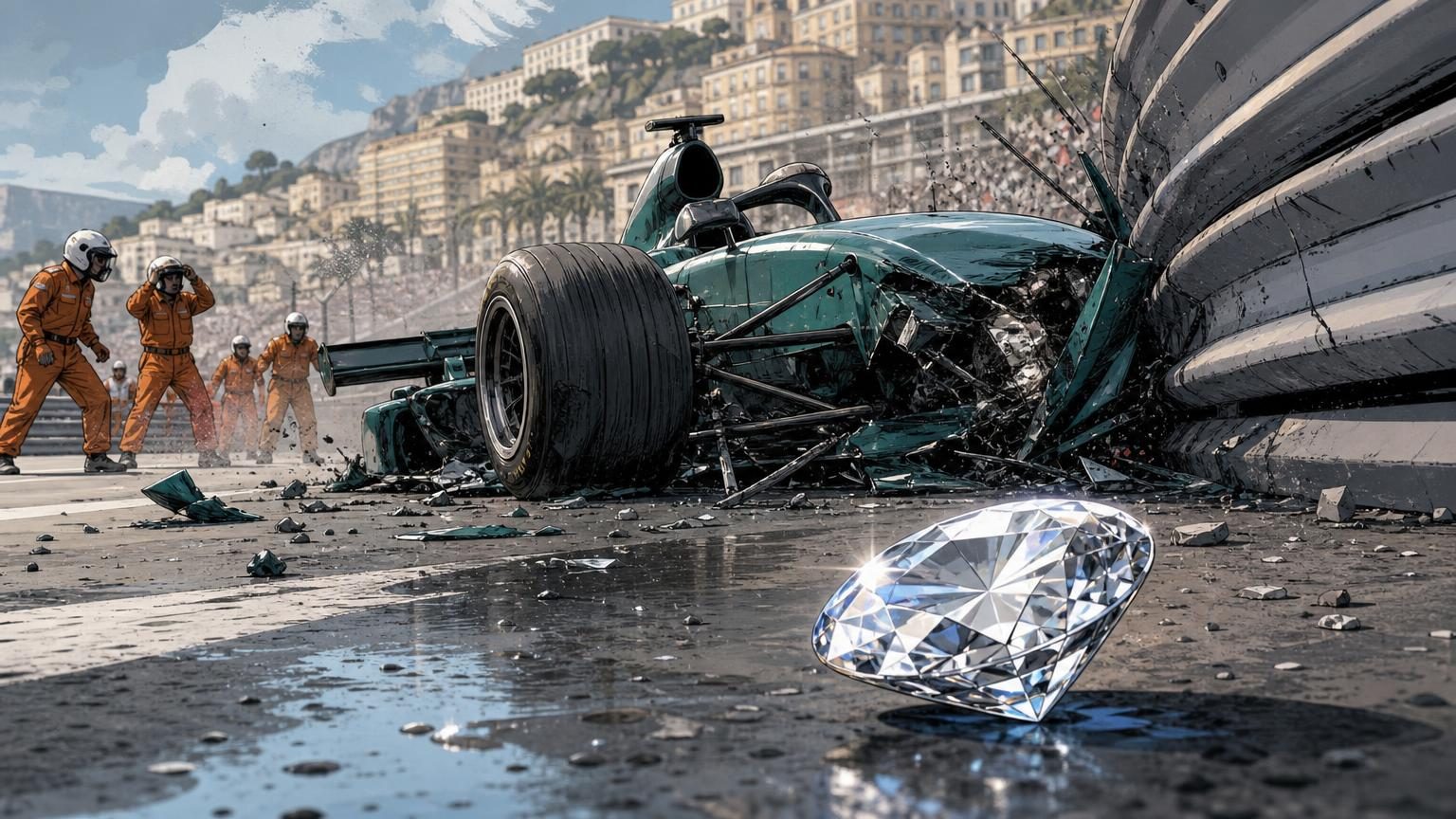
A diamond worth $300,000 that was fixed to the front of a Jaguar Racing car at the 2004 Monaco Grand Prix disappeared after the car crashed on the opening lap, and its whereabouts remain unknown more than two decades on, according to BBC Sport.
The stone, 1.4 carats in size, was welded into a steel casing and mounted on the nose cone of rookie driver Christian Klien's car for the race on 23 May 2004. A second diamond was attached to team-mate Mark Webber's car.
The stunt was the brainchild of Jaguar's director of communications, Nav Sidhu, who had struck a tie-in with the Hollywood film Ocean's Twelve, which was filming scenes in Monte Carlo that weekend with stars George Clooney, Brad Pitt and Matt Damon. The film's plot revolved around the theft of a diamond-encrusted Faberge egg, prompting Sidhu to arrange for diamond company Steinmetz to supply gems for the two Jaguar cars, which would be worth around $1m combined today.
The promotion came at a difficult time for Jaguar. Then team principal Tony Purnell told BBC Sport his role had shifted from running the team to trying to sell it, after parent company Ford decided to withdraw from Formula 1. "It was probably the worst year of my life," Purnell said.
Klien, starting 14th on the grid in only his sixth grand prix, made contact with a Jordan car exiting the Mirabeau corner before sliding into the barriers at the Loews hairpin. He was unhurt, but the front of his car - and the diamond attached to it - was badly damaged.
Sidhu said he was unable to reach the car until it was recovered behind the barriers at the end of the 76-lap race. "That hour and a half waiting for the race to finish felt like a day and a half," he told BBC Sport. By the time he inspected the wreckage, the diamond was gone.
Sidhu rejected suggestions that a fake stone had been used, arguing no diamond company would risk the reputational fallout of being caught using an imitation. Purnell backed the diamond's authenticity, recalling that team managing director David Pitchforth had tested it by scratching a window with it before it was fitted to the car.
Neither man could offer a definitive explanation for what happened to the stone. Purnell suggested someone may simply have pocketed it amid the wreckage. "I do..." he began, before BBC Sport's account was cut short, leaving the fate of the diamond as one of Formula 1's enduring unsolved mysteries.