
MET launches Manta 3 helmet after year of use by UAE Team Emirates-XRG
The aero road helmet already worn to Monument and Tour de France wins by Tadej Pogačar's team has gone on sale, with MET claiming gains in speed, ventilation and safety over its predecessor.
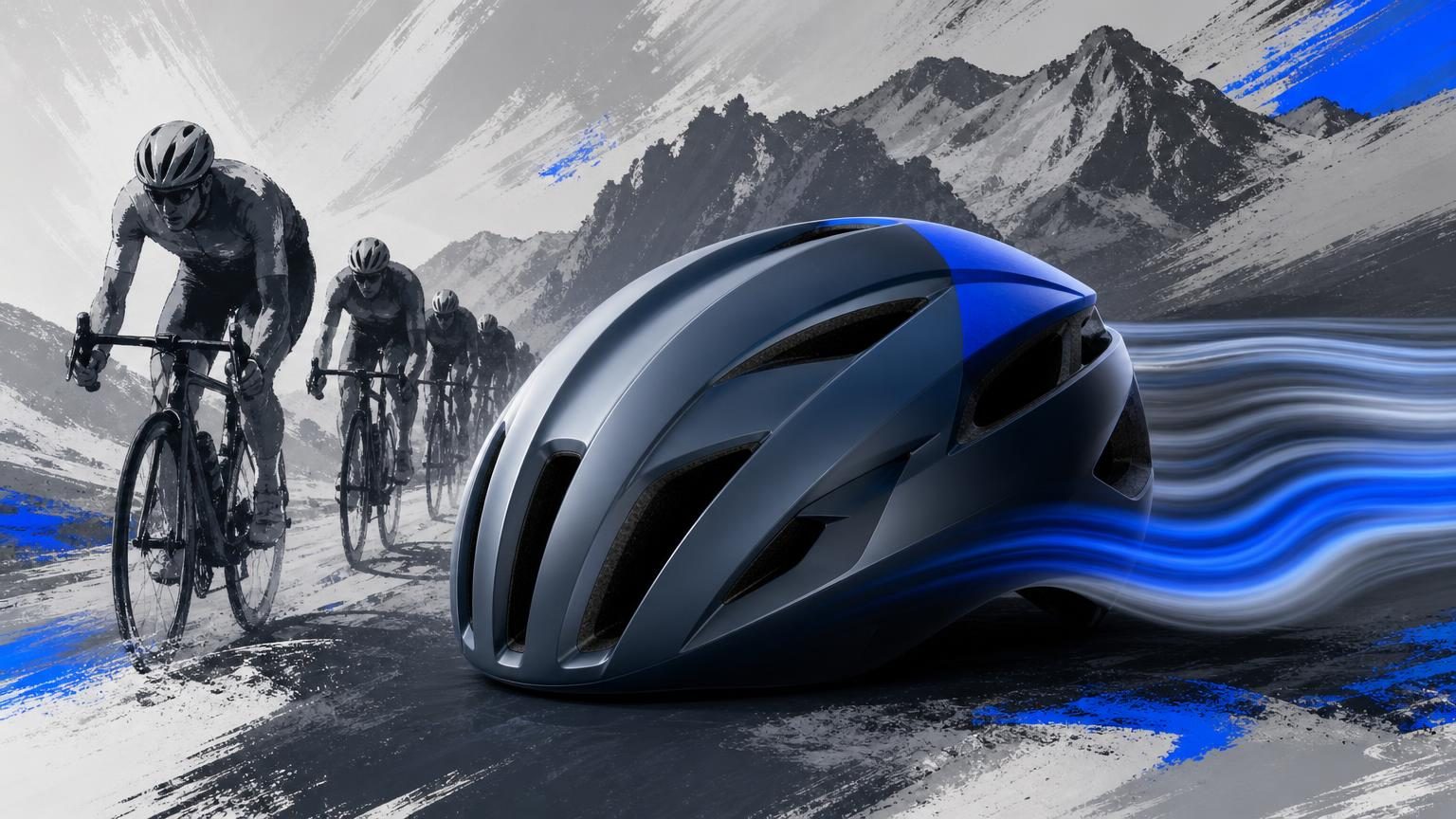
MET has officially launched the Manta 3, an aero road helmet that had already been in competition use for almost a year before reaching the market, Cyclingnews reported.
The helmet first appeared in early 2026 when Tadej Pogačar wore it to win Milan-San Remo. Since then it has been used almost exclusively by his team, UAE Team Emirates-XRG, through a Tour de France victory, further Monument wins and a men's road race world title for Brandon McNulty.
The Manta 3 is priced at £299.99 ($375/€330) and weighs a claimed 250g in medium, with Cyclingnews recording 249g on its own scales for a medium sample. It comes in small, medium and large sizes.
MET developed the helmet using its own wind tunnel, The Tube, under the tagline 'Aero is Proven'. The brand says it is six watts faster than the outgoing Manta 2, though it has not specified the test speed. Cyclingnews suggested this was likely measured at 45-50kph, the range typical of WorldTour road racing, and said MET's figure was plausible based on its own helmet testing data.
MET also states the Manta 3 topped its internal testing against benchmark rival helmets, though Cyclingnews noted it has not yet verified the aerodynamic claims independently in its own wind tunnel.
The shell is narrower and longer than the Manta 2, with more contouring intended to channel air down the back of the head rather than create turbulence, giving it a profile Cyclingnews compared to the Trek Ballista and Oakley Velo Mach, though with noticeably more vents.
Ventilation is said to be 10% better than the previous Manta, tested using a thermal imaging system and a copper-coated head model. The improvement comes from larger frontal vents, a brow vent borrowed from the Trenta Gen 2, and internal channelling that Cyclingnews likened to the system used in the POC Procen Air.
On safety, the Manta 3 carries a five-star Virginia Tech Helmet Lab rating. MIPS Air Node is fitted internally for rotational impact protection, and MET says the design was informed by analysis of 142 crashed helmets from its sponsored teams and 745 test impacts across varying angles and speeds.
Colour options include matte black, absolute white, gloss red and team colourways, with a DualGel front pad and a USB LED light available as separate accessories.
Testing the helmet on the road, Cyclingnews reported that fit has improved markedly over the previous Manta and the first-generation Trenta, both of which it found tight at the sides, while the new MIPS Air Node integration is retained without compromising comfort.