
Drone-delivered doping samples pass scientific test, ITA study finds
A peer-reviewed study backed by the International Testing Agency found drone transport did not affect the integrity of athletes' blood and urine samples, opening a path for faster anti-doping logistics.
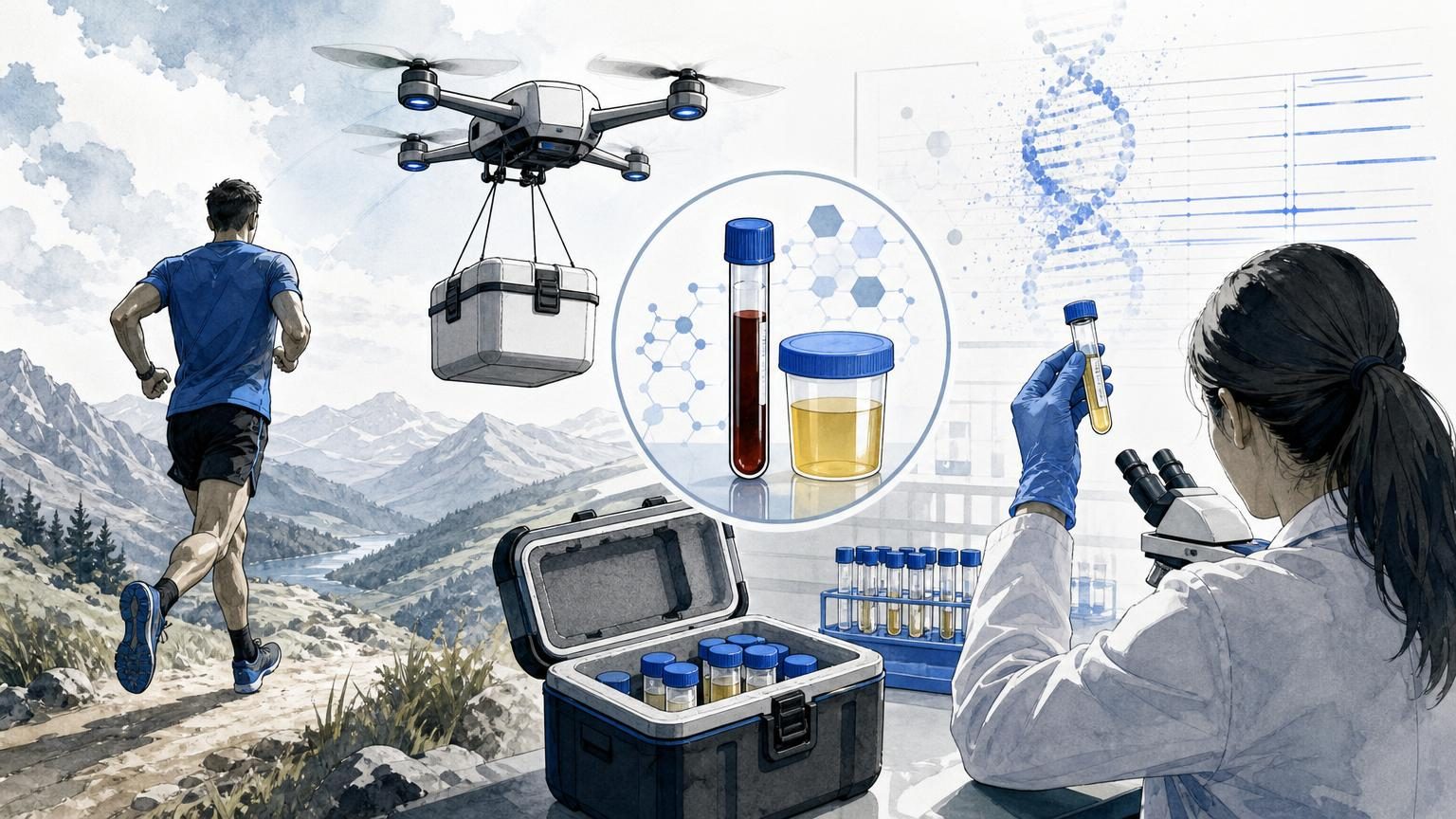
A study carried out by the International Testing Agency (ITA) has found that drones can safely transport anti-doping samples over short distances without compromising their integrity, according to Cyclingnews.
The ITA, which runs most of professional cycling's anti-doping programme, said the peer-reviewed research was published in September and formed part of its "Integrity in Flight" project, which had previously tested long-range sample transport over 1,000km in Alaska.
The latest trial was conducted in Doha, Qatar, in 2022. Researchers took urine, blood and dried blood spot samples from more than 20 volunteers and ran standard Athlete Biological Passport analysis, including steroid profiles and blood values, comparing results from samples that were not transported with those flown by drone over distances of 5km and 20km.
No significant differences were found, and no sample moved from a negative to a positive result, or the reverse, as a result of the flight.
The drone used, the RigiTech Eiger, can reach speeds of almost 120km/h and fly as far as 100km, though its payload is limited to 3kg, restricting how many samples can be carried on a single flight.
The ITA said drone transport could ease logistical bottlenecks in busy city centres, such as during Olympic Games, or cut delivery times from remote locations where road travel is far slower than a direct flight. It cited the 2026 Tour de France stage finishing in Sallanches as an example, noting the town is 60km by air from the World Anti-Doping Agency's laboratory in Lausanne, but 130km by road.
"Innovation is essential to addressing practical challenges in anti-doping, but it must always be underpinned by robust science and the highest standards of sample integrity and chain of custody," said Benjamin Cohen, the ITA's Director General.
Cohen added that the research was assessing whether drones could become "a reliable additional option for transporting samples over long distances or across difficult terrain", and said the findings could also help remote communities access laboratory and medical services more quickly.
The World Anti-Doping Agency (WADA) requires samples to reach accredited laboratories within 60 hours if kept on ice, or 27 hours if stored at an average temperature of 15°C.
WADA's Senior Director for Science and Medicine, Professor Olivier Rabin, backed the concept when it was first tested in Alaska, saying sample transport to accredited laboratories "can be an expensive and logistically difficult process", particularly from remote areas.
Rabin said modern technologies had the potential to ease those challenges without compromising quality, but added that any system "must, of course, be robustly tested to ensure they are fully reliable and fit-for-purpose in the anti-doping context."