
Cycling agent explains rise in riders breaking contracts early
Agent Alex Carera tells La Gazzetta dello Sport that longer contracts and changed team ownership structures are behind a wave of early exits, including Richard Carapaz, Filippo Ganna and his own client Giulio Ciccone.
Riders quitting teams before their contracts expire has become increasingly common in professional cycling, with Richard Carapaz, Filippo Ganna and Giulio Ciccone all agreeing exits in recent weeks to join new squads, and women's rider Paula Blasi doing the same.
Agent Alex Carera, who represents Ciccone and Blasi through his agency A&J All Sports, told La Gazzetta dello Sport that a lengthening of standard contracts is one of the main drivers.
Carera said a longer deal makes it more likely disputes will arise and more likely a rider will push to leave rather than wait out the term. He said a short, two-year contract rarely causes conflict severe enough to force an early departure, but a five-year deal changes the calculation significantly.
He also pointed to the fact that breaking a contract requires more than agreement with a rider's current team, since a new employer must also be lined up and ready to sign.
Carera said that shift is tied to changes in who owns WorldTour teams. Until five or six years ago, he said, team owners were often former riders acting as managers without a long-term strategic outlook and without appetite for the risk of poaching from rivals.
Now, he said, several owners are the sponsoring companies themselves, naming UAE, Decathlon, Lidl and Red Bull, bringing a more managerial, long-term approach that treats the cycling team as a core asset of the business or investment fund.
That ownership model, Carera argued, has made teams more aggressive in the transfer market because they need to justify annual spending, with far greater sums of capital now invested in the sport than before.
Several leading riders have left teams early in recent seasons, including Remco Evenepoel and Primož Roglič, who both moved to Red Bull-Bora-Hansgrohe, and Juan Ayuso, who joined Lidl-Trek.
The UCI has since introduced a requirement for a three-way agreement between a rider, their current team and their prospective new team before an early move can be completed, following controversy over Cian Uijtdebroeks' departure from Visma to Red Bull.
Carera, who also represents Uijtdebroeks, identified that move in December 2023 as the turning point for the trend. He said early terminations used to happen roughly once every three years but now occur around ten times a year, alongside a sharp rise in team budgets, with a €25 million budget considered wealthy in 2020 now ranking among the lowest in the sport.
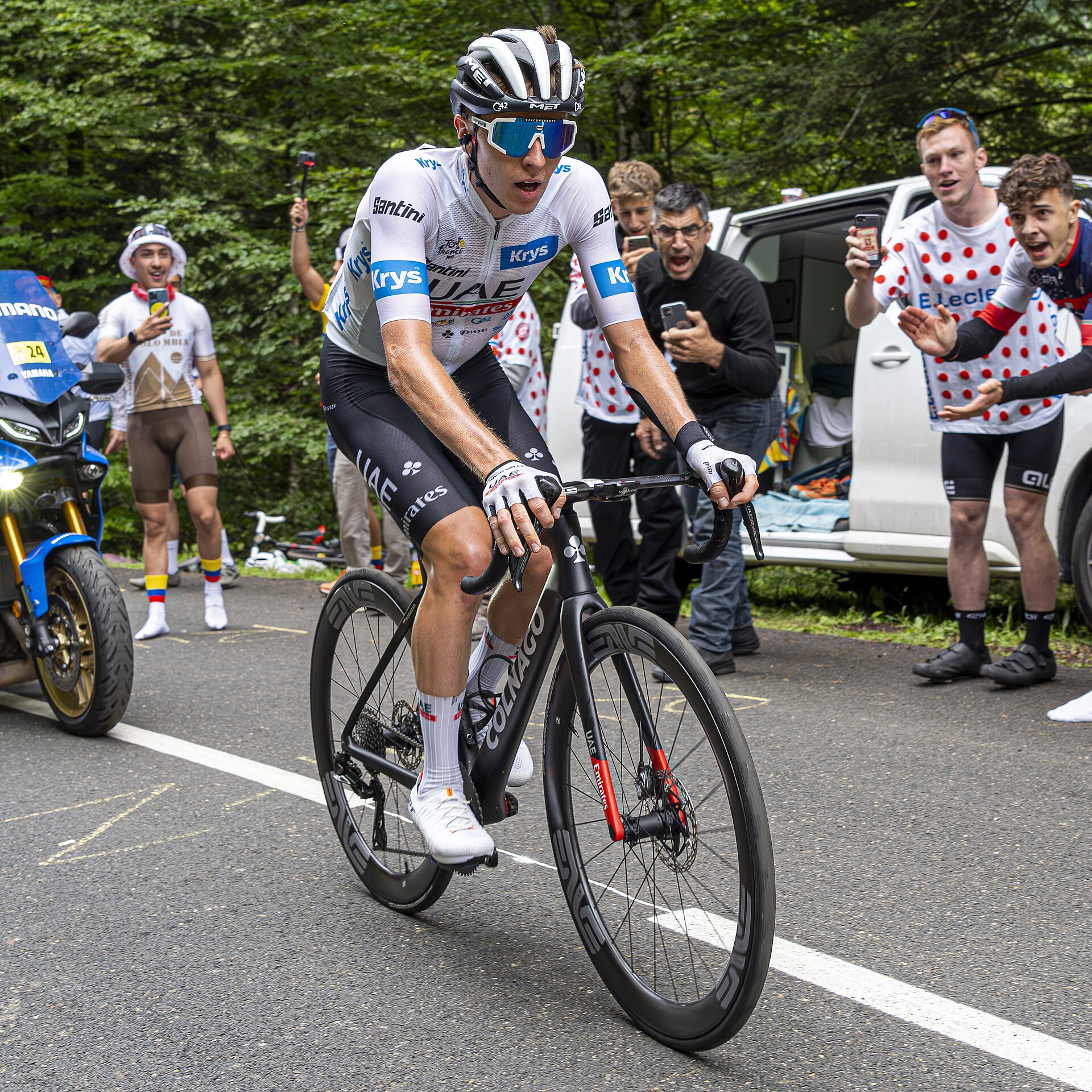
Asked by La Gazzetta's Ciro Scognamiglio whether Tadej Pogačar, tied to a contract running until 2032, was an exception to this new market freedom, Carera agreed, saying the Slovenian's value to the sport is now so high that any contractual clause around him is largely symbolic.
Pogačar is grouped among a small number of riders effectively locked into long-term arrangements, alongside Wout van Aert, Marianne Vos and Mads Pedersen, who hold contracts described as running until retirement.
Photo credits
File photo (2023). Photo: Hugo LUC · CC BY-SA 4.0 · via Wikimedia Commons · shown in full here; cropped in thumbnails
